Running Life
Garmin and Your Training Plan: What the Integration Actually Changes
Garmin has become the leading GPS watch brand for runners, with a significant share of the endurance sports market. But simply owning a Garmin watch isn't enough it's what you do with the data that truly matters. Combining Garmin Connect with an intelligent training plan can completely transform the way you train and improve as a runner.
StrideMatch Team29 septembre 20265 min Temps de lecture
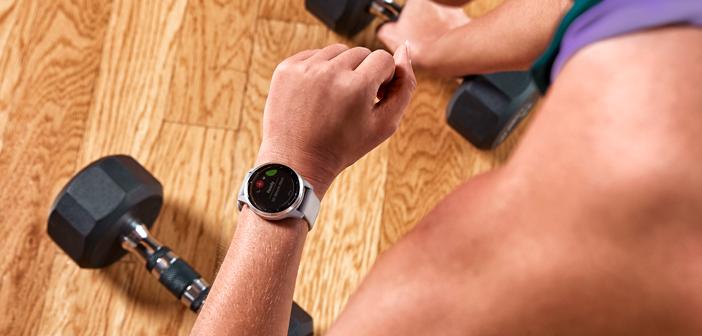
Garmin is now the leading GPS running watch brand, with a significant market share among regular runners. But owning a Garmin is only the beginning — what really matters is how you use the data it collects. Combining Garmin Connect with an intelligent training plan can completely transform your training experience.
In this article, we explain what Garmin + an adaptive training plan can bring you, the key features to understand, and how to get the most out of your data.
What Garmin Connect measures
A modern Garmin watch (Forerunner, Fenix, Epix...) collects an impressive amount of data during every run.
- Pace: Workout validation and intensity control
- Heart rate: Training zones and effort management
- Cadence: Running economy and injury prevention
- Ground contact time: Biomechanical efficiency
- Vertical oscillation: Running efficiency
- Estimated VO2 max: Aerobic capacity evolution
- Training load: Overtraining risk management
- Training status: Garmin recommendations
The limits of Garmin Connect alone
Garmin Connect is excellent for collecting and displaying your data. However, the platform has limitations:
Garmin Coach plans are relatively generic. They are based mainly on your objective and estimated fitness level, but they do not always adapt precisely to your real progression.
Recommendations can sometimes be too conservative or too ambitious depending on the runner's profile.
There is no integrated equipment recommendation. The watch tells you what workout to do, but not which shoes are best suited for that workout.
The ecosystem remains relatively closed: your data stays mainly inside Garmin, with limited cross-platform analysis.
What Garmin + an adaptive training plan changes
Connecting Garmin data to an intelligent training platform creates new possibilities.
Cross-platform analysis
Your Garmin data can be enriched with additional information:
- Training history
- Running habits
- Biomechanical profile
- Foot morphology
- Shoe usage history
The goal is no longer just to analyze a single run, but to understand your complete runner profile.
A truly adaptive training plan
An AI-based training platform connected to Garmin can analyze your real sessions and adjust future workouts.
Examples:
Missed workout detected → the next session is modified.
Unusual cadence decrease → possible fatigue signal analyzed.
VO2 max stagnation despite increased volume → intensity distribution adjusted.
Heart rate higher than usual at the same pace → recovery needs reassessed.
The difference is important: instead of following a fixed calendar, your plan evolves with your actual condition.
Personalized equipment recommendations
Training data can also improve shoe recommendations.
Example:
Your Garmin data shows:
- Easy runs around 168 steps/min cadence
- Moderate ground contact time
- High weekly mileage
- Marathon objective
A smart system may recommend a stable, cushioned daily trainer rather than an aggressive carbon racing shoe.
The best shoe is not necessarily the fastest model on the market. It is the one that matches your biomechanics, training volume, and objectives.
How to connect Garmin to a third-party training platform
Method 1: Through Strava
The most common solution.
Connect Garmin Connect to Strava, then connect your training platform to Strava.
Advantages:
- Automatic synchronization
- No manual file transfer
- Centralized activity history
Method 2: Direct Garmin Connect integration
Some platforms use official Garmin API connections.
Advantages:
- Faster synchronization
- More complete data access
However, this requires official integration with Garmin.
Method 3: Manual export
A backup solution.
You can export Garmin files (.FIT or .GPX) and import them manually into another platform.
How to maximize your Garmin + training plan integration
Tip 1: Enable automatic synchronization
Automatic data transfer is essential. Manual uploads reduce the value of having connected tools.
Tip 2: Configure your heart rate zones
Garmin default zones are not always accurate.
For better training decisions, configure your zones using:
- A laboratory test
- A field test
- Your observed maximum heart rate
Tip 3: Activate advanced metrics
Enable advanced running metrics if available:
- Cadence
- Ground contact time
- Vertical oscillation
- Stride length
The more relevant data you collect, the better the analysis becomes.
Tip 4: Combine performance data with biomechanics
Garmin tells you how you run.
A biomechanical analysis helps explain why you run that way.
Combining:
- GPS data
- Training history
- Foot morphology
- Running mechanics
creates a much more complete runner profile.
Garmin + StrideMatch: a complete running ecosystem
The ideal workflow:
-
You run with your Garmin watch and automatically synchronize your activities.
-
You analyze your foot profile through smartphone scanning.
-
StrideMatch combines Garmin/Strava training data with your biomechanical profile.
-
You receive:
- A personalized training plan adapted to your real progress
- Shoe recommendations aligned with your biomechanics and objectives
The future of running is not just collecting more data. It is transforming data into better decisions.
READY TO TAKE ACTION?
Connect your data and personalize your training
Your Garmin data becomes much more valuable when combined with biomechanics and adaptive training. StrideMatch connects these elements to create a more complete and personalized running experience.
Related articles
→ Training 2.0: Should you trust an AI running coach?
→ 10K Pace for 45 Minutes: Splits and Training Plan
→ How many km per week to prepare for a marathon?
→ Running and aging: preventing sarcopenia
→ Marathon nutrition: what to eat before, during and after the race
Trouver vos chaussures idéales
Passez le quiz pour découvrir notre sélection sur mesure.