Pace & Data
10K Pace for 50 Minutes: Splits and Training Plan
*Running a **10K in under 50 minutes** is an achievable and motivating goal for many runners. It proves you can sustain a strong pace over the full distance while building the fitness needed to chase even faster race times. To achieve it, you need to maintain a consistent **10K pace of exactly 5:00/km (8:03/mile)**.
StrideMatch TeamOctober 9, 20265 min Reading time
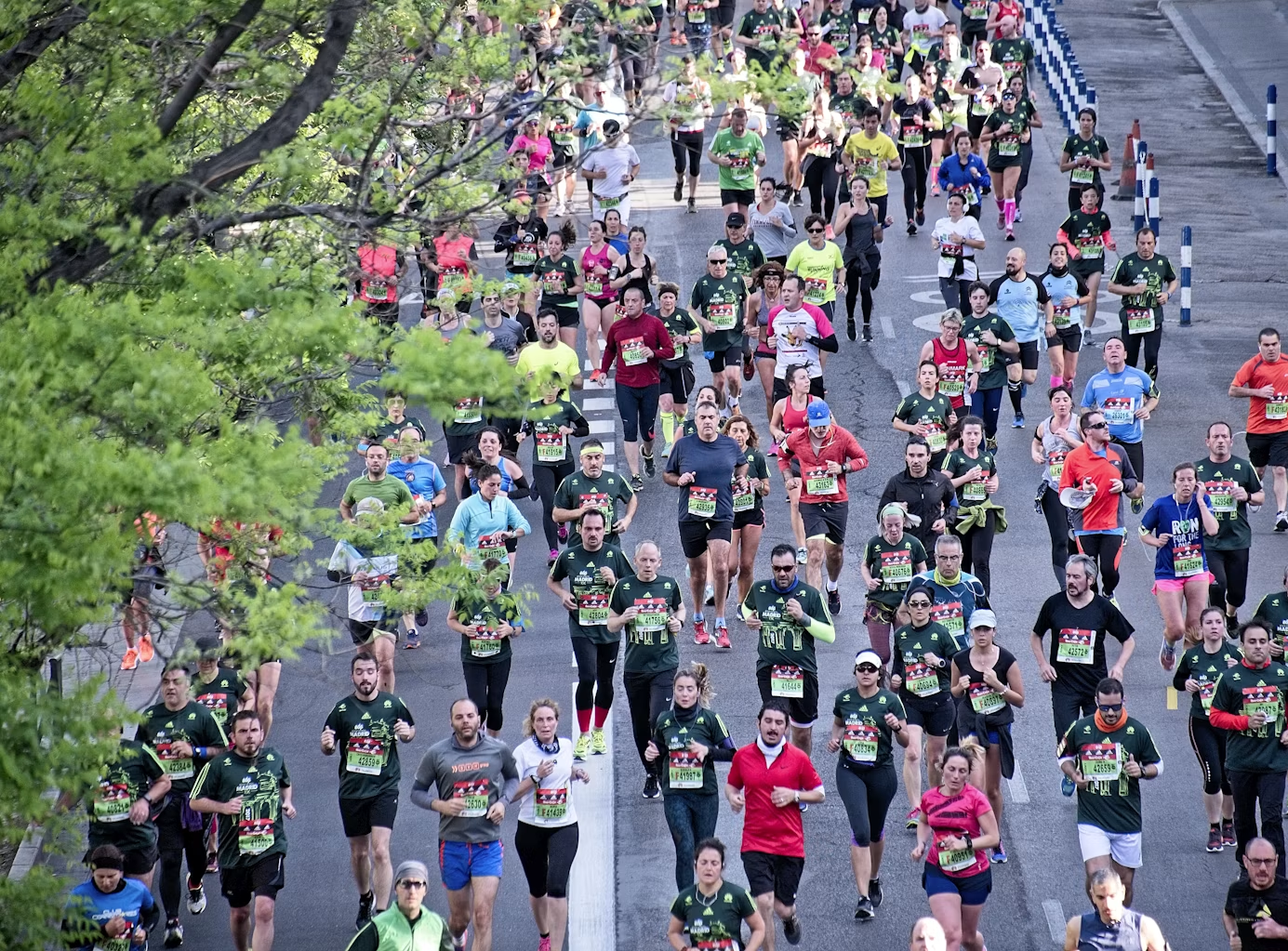
Running a 10K in under 50 minutes is an achievable and motivating goal for many runners. It proves you can sustain a strong pace over the full distance while building the fitness needed to chase even faster race times. To achieve it, you need to maintain a consistent 10K pace of exactly 5:00/km (8:03/mile).
In this guide, you'll learn your target pace, kilometer splits, a proven training plan, and the best race strategy to help you achieve your sub-50-minute 10K.
50-Minute 10K Pace: Key Numbers
| Metric | Value |
|---|---|
| Target finish time | 50:00 |
| Average pace | 5:00/km (8:03/mile) |
| Average speed | 12 km/h (7.5 mph) |
| Estimated MAS (VMA) | 13–14 km/h |
| Runner profile | Intermediate runner progressing toward faster times |
| Recommended peak weekly mileage | 30–40 km |
10K Split Times
To finish in exactly 50 minutes, aim for the following cumulative split times.
| Kilometer | Cumulative Time | Kilometer | Cumulative Time |
|---|---|---|---|
| 1 | 5:00 | 6 | 30:00 |
| 2 | 10:00 | 7 | 35:00 |
| 3 | 15:00 | 8 | 40:00 |
| 4 | 20:00 | 9 | 45:00 |
| 5 | 25:00 | 10 | 50:00 |
Who Can Realistically Run a Sub-50 10K?
A sub-50-minute 10K is within reach for many runners with consistent training.
Typical prerequisites include:
- Running regularly for at least 6–9 months.
- Being able to run 8–10 km continuously without major difficulty.
- A current weekly mileage of around 20–25 km.
- Availability for three training sessions per week over 8–10 weeks.
If you meet these criteria, breaking 50 minutes is a realistic goal with a structured training plan.
Sample 10-Week Sub-50 10K Training Plan
Starting from a base of approximately 20–25 km per week:
| Weeks | Weekly Mileage | Typical Workouts | Long Run |
|---|---|---|---|
| 1–2 | 25 km | 2 easy runs + 1 strides session | 8–10 km |
| 3–4 | 30 km | 2 easy runs + 1 MAS (VMA) workout | 10–12 km |
| 5 | 22 km (Recovery week) | Easy runs + 1 short quality session | 8 km |
| 6–7 | 32 km | 2 easy runs + MAS + 10K pace workout | 12 km |
| 8–9 | 35 km | 2 easy runs + MAS + 3 × 2 km at 10K pace | 12–14 km |
| 10 | Race week | 2 short easy runs + 10K race | Race day |
Key Workouts for a Sub-50 10K
MAS (VMA) Workout
Once per week.
A classic session is:
10 × 400 m at MAS pace (approximately 4:15–4:30/km) with 90 seconds of easy jogging recovery.
This workout improves your maximum aerobic speed and running economy.
10K Pace Workout
Once per week during the specific training phase.
A classic workout is:
3 × 2 km at 5:00/km, with 90 seconds of easy jogging recovery.
This is the key session for teaching your body to sustain race pace.
Long Run
Complete one long run each week at an easy pace.
Gradually increase the distance from 8 km to 14 km.
During the final four weeks, include 2–3 km at your target 10K pace near the end of the run.
Race Strategy for a Sub-50 10K
There is very little room for pacing mistakes in a 10K.
A difference of just 10 seconds per kilometer can add nearly 2 minutes to your finishing time.
Consistency is everything.
| Race Phase | Kilometers | Recommended Pace |
|---|---|---|
| Start | 1–2 | 5:05/km (slightly slower than goal pace) |
| Settle In | 3–8 | Exactly 5:00/km |
| Finish | 9–10 | 4:55–5:00/km |
Choosing the Right Running Shoes
For a 50-minute 10K, a versatile performance trainer is more than enough.
You don't need an expensive carbon-plated racing shoe.
| Feature | Recommendation |
|---|---|
| Shoe type | Versatile performance trainer |
| Weight | 220–260 g |
| Heel-to-toe drop | 6–10 mm |
| Midsole | Moderate cushioning with responsive foam |
| Plate | Optional—not essential |
Common Mistakes to Avoid
Starting Too Fast
This is by far the most common mistake.
If you begin at 4:45/km because you feel great, you're likely to slow dramatically later and finish well above your target time.
Skipping Race-Pace Workouts
Without regularly practicing 5:00/km in training, maintaining that pace for an entire 10K becomes much more difficult.
Specific pace sessions are essential.
Running Easy Runs Too Fast
Your easy pace should generally be around 5:45–6:15/km, not 5:10/km.
Running recovery sessions too fast reduces recovery and limits long-term progress.
Once you've broken 50 minutes, the logical next step is working toward a faster half marathon. Be sure to check out our complete guide to half marathon pace.
READY TO BREAK 50 MINUTES?
Build Your Personalized Sub-50 10K Training Plan
Breaking 50 minutes is an achievable and rewarding milestone. StrideMatch creates a personalized 8–10-week training plan tailored to your current fitness while recommending the running shoes best suited to your target pace.
▸ Start My Sub-50 10K Training Plan
Related Articles
→ 45-Minute 10K Pace: Splits, Training Plan & Strategy
→ Running Pace Calculator: Complete Pace Charts for Every Distance
→ 40-Minute 10K Pace: Splits, Training Plan & Strategy
→ Marathon Pace: How to Calculate and Maintain It Over 42.195 km
→ What vVO2max for a 3, 3:30, 4 or 4:30 Marathon? The Reference Table