Chaussures & Équipement
Asics Gel-Kayano 33 vs GT-2000 15: Which Stability Shoe?
Kayano 33 or GT-2000 15? Cushioning, weight, support, fit and price compared, plus our verdict on which runner each shoe suits.
StrideMatch TeamNovember 5, 20265 min Reading time
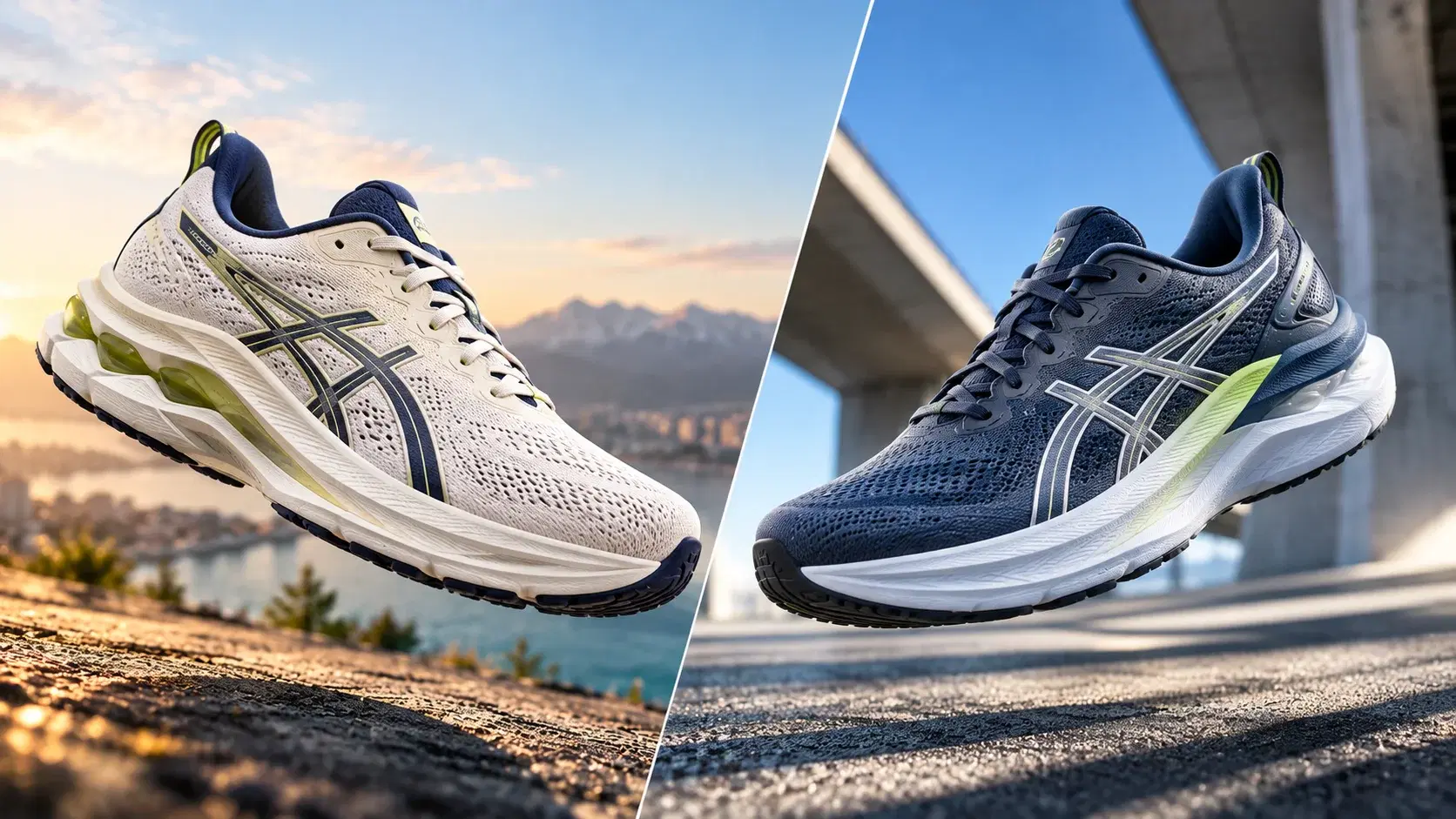
Short answer: the GT-2000 15 is the better daily trainer for most runners: nearly the same support, about 1.7 oz lighter and $20 cheaper. The Kayano 33 wins on long runs and for runners who want maximum cushion. Both have an 8 mm drop and moderate, non-corrective stability.
Two Asics stability shoes, two jobs
Asics has two flagship models for runners who want support. The Kayano is the premium one: more cushion, more shoe, higher price. The GT-2000 is the lighter, simpler option. In 2026 the gap has narrowed: the GT-2000 15 gained stack height and a softer ride, while the Kayano 33 toned its support down.
So the real question is no longer “strong or mild stability”. It is “maximum cushion or lighter feel”.
Specs side by side
| Asics Gel-Kayano 33 | Asics GT-2000 15 | |
|---|---|---|
| MSRP | $170 | $150 |
| Weight (men’s US 9) | 10.5 oz | 8.8 oz |
| Stack heel / forefoot (men’s) | 39 / 31 mm | 37 / 29 mm |
| Drop | 8 mm | 8 mm |
| Midsole | FF Blast Max + FF Blast Plus | FF Blast Max |
| Heel cushioning | PureGEL | PureGEL |
| Stability system | FluidSupport (wide base, foam densities) | 3D Guidance System (wide base) |
| Outsole | ASICSGRIP + AHAR+ | AHAR LO + AHAR+ |
| Men’s widths | Narrow, regular, wide, extra wide | Regular, wide (2E), extra wide (4E) |
| Women’s widths | Narrow, regular, wide | Narrow (2A), regular (B), wide (D), extra wide (2E) |
Width availability varies by market and colorway.
Cushioning and ride
Kayano 33. The softest Kayano yet. The FF Blast Max top layer is plush, while the FF Blast Plus layer below keeps the shoe stable. The ride is comfortable and protective but not lively: energy return is modest. It holds its protection well past 12 miles.
GT-2000 15. One foam, FF Blast Max, tuned denser than in the Novablast. The shoe feels livelier, with a mild forefoot rocker that helps you roll through. The trade-off: the cushioning fades sooner on long runs.
Cushioning verdict: Kayano for all-day comfort, GT-2000 for a lighter, peppier feel.
Support: which one is more stable?
Neither uses an old-school hard medial post. Both rely on a wide base and geometry that guides the foot.
• Kayano 33: FluidSupport replaces the 4D Guidance System of earlier versions. The guidance is subtler. Testers rate it as moderate stability, suited to mild to moderate heel needs. It is not built for runners who need heavy arch support.
• GT-2000 15: wide base, firm foam at the heel and forefoot. Support is close to the Kayano’s, and it feels like a stable neutral shoe rather than a corrective one.
Support verdict: nearly a tie. If you need firm, corrective stability, a more structured model will serve you better than either.
Fit and sizing
Both run true to size in length, but their toe boxes differ.
• Kayano 33: slightly tapered toe box, regular width, secure heel. If you have wide feet, go straight to the wide version.
• GT-2000 15: very low toe box. Several testers hit the front of the shoe sooner than in other models. If you have high-volume toes or fall between sizes, go half a size up.
At Asics, a men’s US 9 is an EU 42.5 and reads 27 cm on the label (Japanese size). Stick with your usual US size: the label cm is longer than your measured foot. To translate your size from another brand, use the StrideMatch size converter.
Where each shoe falls short
Kayano 33: heavy, expensive, limited energy return. Not a shoe for faster workouts, and the upper can run warm.
GT-2000 15: cushioning that fades on long runs, a low toe box that can press on your toes, and a weight that is only average for its category.
Which one for which runner?
• You mostly run 3 to 10 miles, several times a week: GT-2000 15.
• You are training for a marathon or do lots of slow long runs: Kayano 33.
• You are on a budget: GT-2000 15, or see our cheaper alternatives to the Kayano 33.
• You are a heavier runner or want comfort first: Kayano 33.
• You have high-volume feet or sensitive toes: Kayano 33, or the GT-2000 15 half a size up.
• You have high arches: read our guide to running shoes for high arches first, since a stability shoe is not always the answer.
Many runners do well rotating both: GT-2000 during the week, Kayano for the Sunday long run.
FAQ
Is the GT-2000 15 as stable as the Kayano 33? Almost. Both offer moderate stability. The main difference is cushioning and weight, not support.
Should I wear the same size in the Kayano and the GT-2000? Usually yes. The GT-2000 15 has a lower toe box, so if you are between sizes, go half a size up in that model.
Is the Kayano 33 good for beginners? Yes, if the price works for you. For a first stability shoe, the GT-2000 15 gives similar support for less money and less weight.
Do I really need a stability shoe? Not necessarily. If neutral shoes have never bothered you, there is no reason to switch. If you have ongoing pain, see a podiatrist.
Kayano or GT-2000, the answer depends on your stride. Take the free StrideMatch test to find the support level that suits you, or compare both shoes side by side.