Chaussures & Équipement
Pied égyptien, grec, romain : quelle chaussure de running pour votre forme de pied ?
Pied égyptien, grec ou romain : comment reconnaître votre forme de pied et choisir la bonne boîte à orteils et la bonne pointure en running.
StrideMatch Team27 novembre 20265 min Temps de lecture
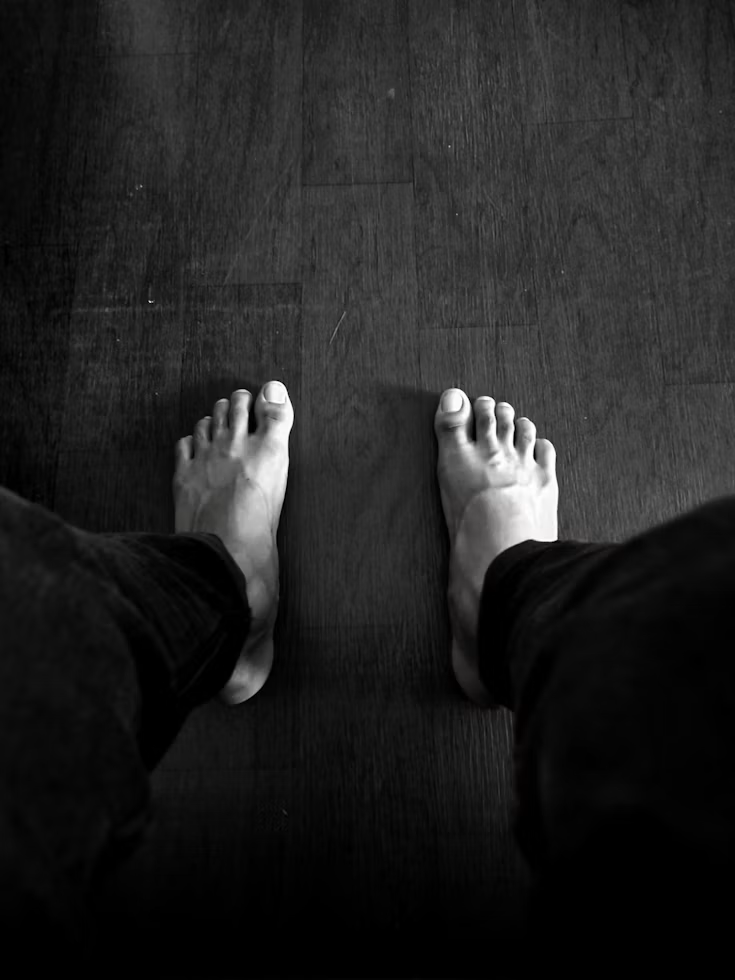
Short answer: Egyptian feet have the longest big toe, Greek feet a longer second toe (Morton’s toe), and square or Roman feet have two or three toes of equal length. These labels describe your toe line, not a medical category. For running shoes they matter in two ways: measure your size to your longest toe, and pick a toe box whose shape follows yours.
Where these foot shape types come from
The Egyptian, Greek and Roman labels come from podiatry and shoemaking. They look at one thing only: the relative length of your toes, seen from above. They are not a diagnosis, a sign of ancestry or a genetic test.
What studies that measured these shapes actually show:
• Proportions vary a lot between populations. The figures you often see online (about half Egyptian, a quarter square, a quarter Greek) are not universal. A recent meta-analysis on Morton’s toe found rates ranging from about 28% to 66% depending on the country studied.
• Definitions are not standardized. Some studies add an in-between “semi-Roman” type. Some websites also mention “Germanic” or “Celtic” feet, but those labels are not backed by serious research.
• The link with injuries is weak. A few studies associate Greek feet with more bunions or hammertoes, without strong evidence.
So keep the useful idea: your toes draw a line, and your shoe should respect that line.
How to identify your foot shape
Stand barefoot and look down at your toes. Better: trace the outline of your foot on a sheet of paper.
| Shape | What you see | Toe line |
|---|---|---|
| Egyptian | Big toe is longest, the others slope down | Diagonal, from inside to outside |
| Greek (Morton’s toe) | Second toe is longer than the big toe | Peaks at the second toe |
| Square (Roman) | First two or three toes are the same length | Flat, then a short slope to the little toe |
Your two feet can differ slightly. Use the longer one.
What it changes for your shoe size
This is the key point most runners miss: foot length is measured to your longest toe, which is not always your big toe.
• Egyptian foot: measure from heel to the tip of the big toe. This is the “standard” case most size charts assume.
• Greek foot: measure from heel to the tip of the second toe. If you measure to the big toe, you underestimate your length and your second toe will hit the front of the shoe. The classic result is a black toenail after a long run.
• Square foot: length is rarely the problem. Forefoot width is.
Whatever your shape, leave about a thumb’s width in front of your longest toe once laced. To turn your measurement into a US size for each brand, use the StrideMatch size converter. The full measuring method is in our running shoe size guide.
Which toe box for which foot shape
The toe box is the front of the shoe. Its shape varies a lot between models: some taper to a point, some are rounded, others follow the natural shape of the foot and stay wide at the toes.
| Foot shape | Look for | Avoid |
|---|---|---|
| Egyptian | Asymmetric forefoot with room on the big toe side | Pointy toe box that pushes the big toe inward |
| Greek | Rounded front with length in the center and enough height over the toes | Low or short toe box that makes the second toe curl |
| Square | Wide, barely tapered, “foot-shaped” forefoot | Strong taper that squeezes the outer toes |
A few practical tips:
• Egyptian feet. Most running shoes are built around this shape. The main risk is a pointy toe box that squeezes the big toe. If your big toe already drifts toward the others, width at that point becomes your top priority.
• Greek feet. Your second toe needs length and a bit of height. A low toe box makes it bump and curl. When trying shoes on, press on the front: you should feel space in front of your second toe, not just your big toe.
• Square feet. This is the hardest shape to fit in traditional running shoes. Look for wide-forefoot or “foot-shaped” models. Brands like Altra and Topo Athletic are known for their roomy toe boxes, and many mainstream brands sell wide (2E for men, D for women) versions of their best sellers.
Width is not length
A common mistake: going up a size because the forefoot feels tight. You gain width, but also unnecessary length. Your heel slips, your foot slides forward with each stride, and blisters follow.
If your foot spills over the insole when you stand on it, look for:
1. a wide version of the same model;
2. or a model with a wider toe box out of the box.
What foot shape does not tell you
Toe shape says nothing about your gait, your arch height or how much cushioning you need. A Greek foot can be flat or high-arched. An Egyptian foot can be narrow or wide.
That is why a serious recommendation combines several inputs: foot length and width, forefoot shape, instep volume, but also your weekly mileage and your pace.
FAQ
Is a Greek foot a problem? No. It is a normal variation. It simply means you should measure to your second toe and choose a toe box with enough length and height.
What is the most common foot shape? In most studies, the Egyptian foot is the most common. But proportions vary a lot between populations, and definitions differ between studies.
Should I size up with a Greek foot? Not automatically. Measure from heel to second toe, then apply the usual rule: about a thumb’s width in front of your longest toe. If that puts you half a size up, that is your real size.
Do foot-shaped running shoes suit everyone? No. On a narrow or strongly tapered Egyptian foot, they can feel sloppy and let the foot move around. They work best for square feet or wide forefeet.
Foot shape is only one piece of the puzzle. Take the free StrideMatch test to get models matched to your profile, or compare two shoes side by side.
Trouver vos chaussures idéales
Passez le quiz pour découvrir notre sélection sur mesure.